Sees where the visitor is looking and talks about what is in front of them. The lines are recorded in advance, so they play instantly and cost nothing.
One question, and the tour rearranges itself: for yourself, for the family, or as an investment. Order and emphasis both change with the answer.
What matters about the scheme is marked up in the image itself: the name and the fact stand beside the thing they describe.
The visitor asks in their own words and the assistant answers from the project's knowledge base — and says plainly when something is not in it.
Greeting, qualification, the walk itself and the handover to a person — built from how live viewings actually run.
For a developer's own review: what the assistant sees, what it has kept, what it decided, and what each line cost.
A report for the developer: what buyers actually look at, location by location.
An agent walks the tour during a call and the client sees the same view. A phone call becomes a viewing.
The enquiry reaches the CRM with the segment, the route and the questions asked, so the first call starts informed.
A returning visitor is met at the place they left, with the emphasis that held them last time.
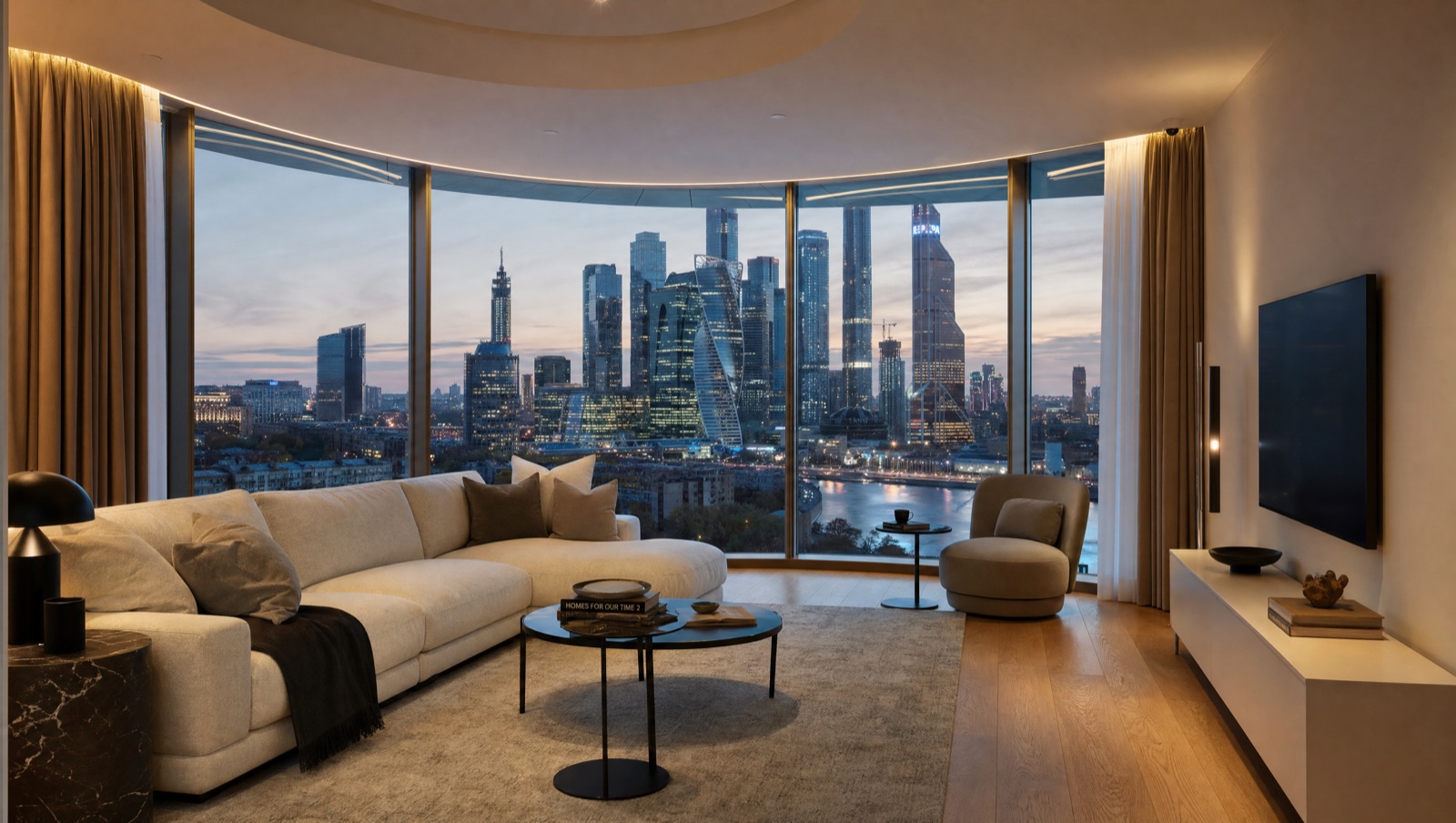
The same locations in evening light — a switch of mood for the viewing.
The next development is connected with data rather than rebuilt: panoramas plus a knowledge base.